The Format #020
9 Feb 2024
-
6 min read
It’s been a very interesting few weeks, there has been some pretty major mainstream news → the Apple Vision Pro came out and Disney now have a stake in Epic Games.
But beyond that, we’ve seen a lot of projects that have taken concepts we’ve discussed once or twice… (Tiny Apps, reward systems etc.) and successfully put them into practice.
Here are some of the articles we’ve found over the past week that dive into those projects, as well as some the problems that we’re trying to address:
Framing the Future of the Internet
We’ve mentioned Tiny Apps quite a lot, but here’s a question, how tiny can a Tiny App be? It’s something that has been partially answered by a company called Farcaster in the past week. They released what they call Frames, similar to Tweets on a newsfeed (or are they Xeets now?). The key difference being that they aren’t just text and images, they’re very small apps that could take any form. You could play a game in one frame, then buy cookies (the good kind) in the next.
“Frames allow anyone, anywhere to easily build small apps with capabilities that grow as other people build new things, with the knowledge that the platform can’t change the rules on them.”
By All Accounts: On Points, Attestations, & Tokens
It would be a sin not to include this post in The Format given how closely it aligns with what we are building here at OPENFORMAT. It answers questions like ‘Why points’ and more importantly ‘Why on-chain points’, then dives into the future of gamification, and why it makes complete sense for Duolingo 2.0 to exist on the blockchain.
People Are Using Basic AI to Bypass KYC - But Should You?
Have you ever wondered how much it would cost to become John Wick? Apparently the answer is a whopping… $15. Via an underground service, codename OnlyFakes, you can now get an AI-generated ID that is sufficiently accurate that it can be used to pass KYC and open up a bank account. Oh and in other news a deepfake CFO managed to trick a worker into transferring $25m. 👀
Mozilla Monitor’s new service removes your personal info from data broker sites automatically
It says a lot about the current state of the internet when you need to pay $107.88 per year for a subscription to prevent your private and sensitive data from being sold on sites across the web. It’s good to see Mozilla’s efforts to address this issue, but it points to a bigger problem → the data-based business models that have driven the internet till now, and why they fundamentally need to change.
Lacoste made $150k royalty revenues with their Web3 program UNDW3
We normally wouldn’t link to a Linkedin post, but this one perfectly captures how an established company could use an on-chain reward system to enhance their brand. It looks at Lacoste’s recent UNDW3 campaign which rewarded users for points when they completed activities across all sorts of different channels, from their Discord to in-person events. It’s a really great example of a brand using on-chain rewards to create a deeper bond with their community.
OPENFORMAT News
After a week of talking, building, thinking and presenting, the real extent of what OPENFORMAT is needed for, and the impact it could have, is becoming more and more clear. That means a lot more talking about use cases…
I’m turning a workout tracker into a fitness ecosystem using OPENFORMAT 💪
In the last issue of The Format I explained a bit about a workout tracker I built using OPENFORMAT and a low-code tech stack, but I didn’t really go into much detail on why I built it, and what hypothesis I was trying to test.
It was all around trying to link together the data from all the fitness apps I use, to create a space where all these apps are connected. That became a very basic ‘Fitness Ecosystem’, and as I built it I realised there were all sorts of cool implications. I won’t spoil the post, you can check it out for yourself…
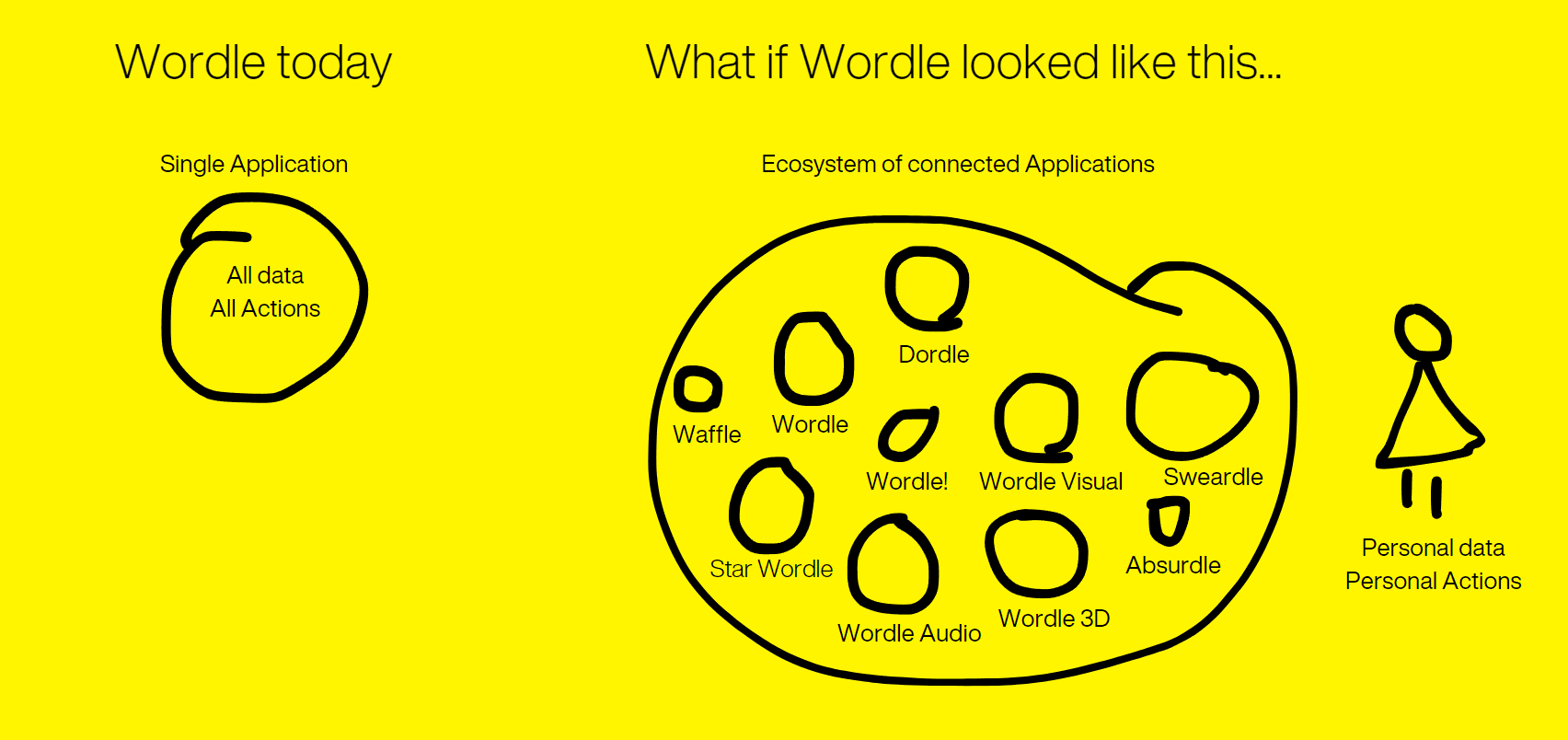
Hyper Wordle: An OPENFORMAT Experiment
After her presentation at YGWYG in Bristol, Sarah had quite a few people who were interested and wanted to see it. So we sat down and recorded it (you can check it out here).
It deliberately focused on the WHY we are thinking about building in this way rather than the HOW. Wordle was just a simple example to showcase this - these concepts could be applied to almost any industry or app.

Get Real…
We've been heads down building for a while now and we know that to bring what we're building to life for people, we need to Get Real. Well, more than just us, the space needs to get real for people to see what is actually possible and why it matters. Real solutions to real problems.
We've had some mind blowing conversations recently with technologists, developers, start-ups and agencies alike. We're fascinated by how people are talking about using our technology and so we want to start surfacing this. Real problems, real users. Watch this space...
And that’s all for this week.
Have a great weekend, Dan and the OPENFORMAT team 👋🏽

Prompt (generated using Dalle-3): “Imagine an amusing scene where an alligator, anthropomorphized and dressed in business attire, is managing a rewards scheme. This alligator stands behind a sleek, modern desk in an office environment, surrounded by colorful posters and charts illustrating the rewards program. The alligator has a friendly demeanor, wearing glasses and holding a pointer stick to explain the benefits of the rewards scheme to an attentive audience of various animals, also anthropomorphized, who are potential participants. The office is filled with promotional materials like brochures and a large monitor displaying the rewards scheme details, such as points for purchases, loyalty bonuses, and exclusive offers. The scene captures a humorous and creative twist on a corporate rewards program presentation, emphasizing the alligator's role as the enthusiastic scheme runner.”